Plan funding screen
Read the ID card. Then check the state.
The member card can show whether a carrier funds the plan or only administers it. Use that clue to identify the plan type, then open the applicable state guidance before choosing a state or federal IDR route.
ID card examples
Look for who carries the risk.
Read both sides of the card, including the fine print. The important question is not whose logo appears at the top—it is whether the carrier insures the plan or administers claims while an employer or plan sponsor funds them.
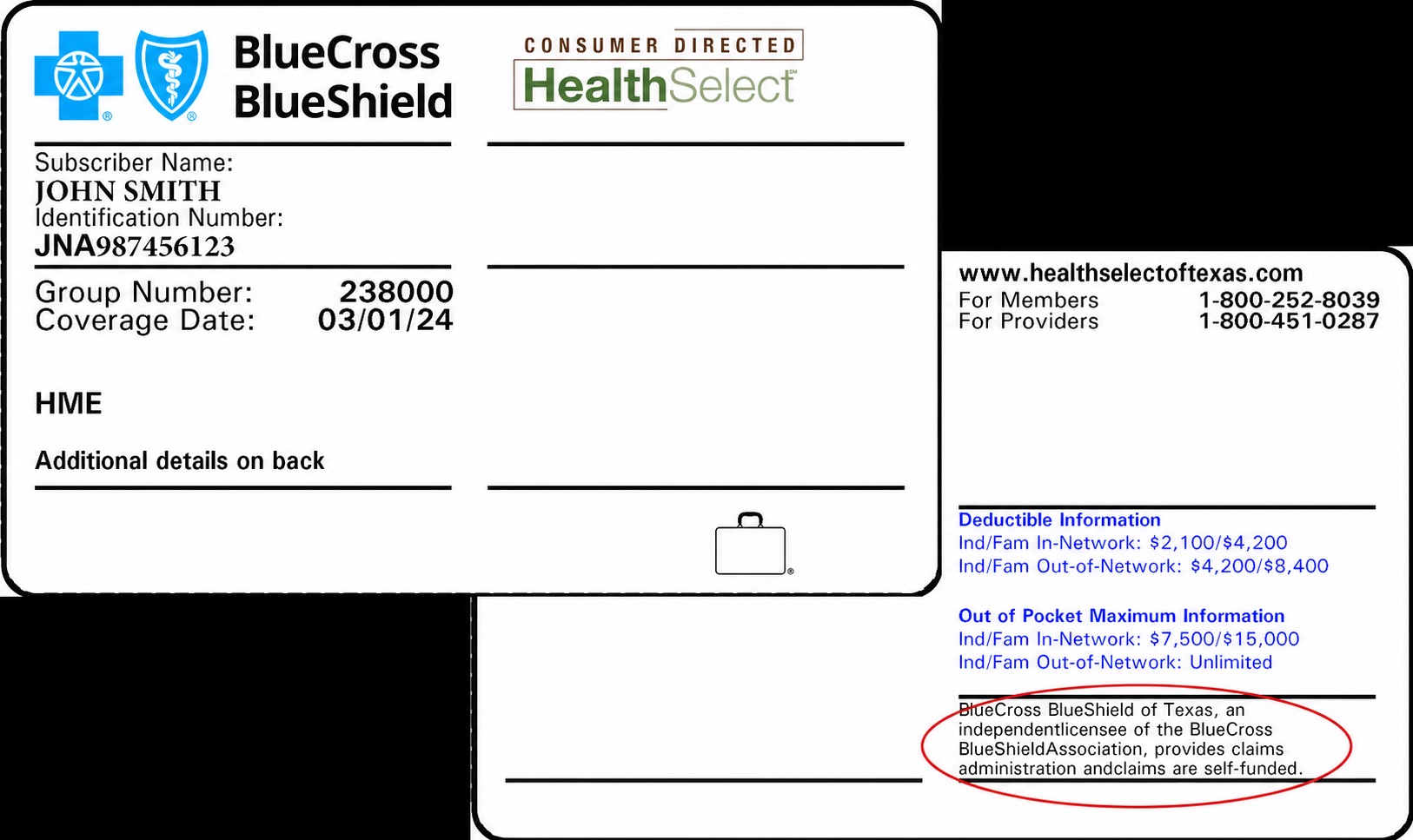
“Claims are self-funded”
The clearest version: the card directly states that claims are self-funded.
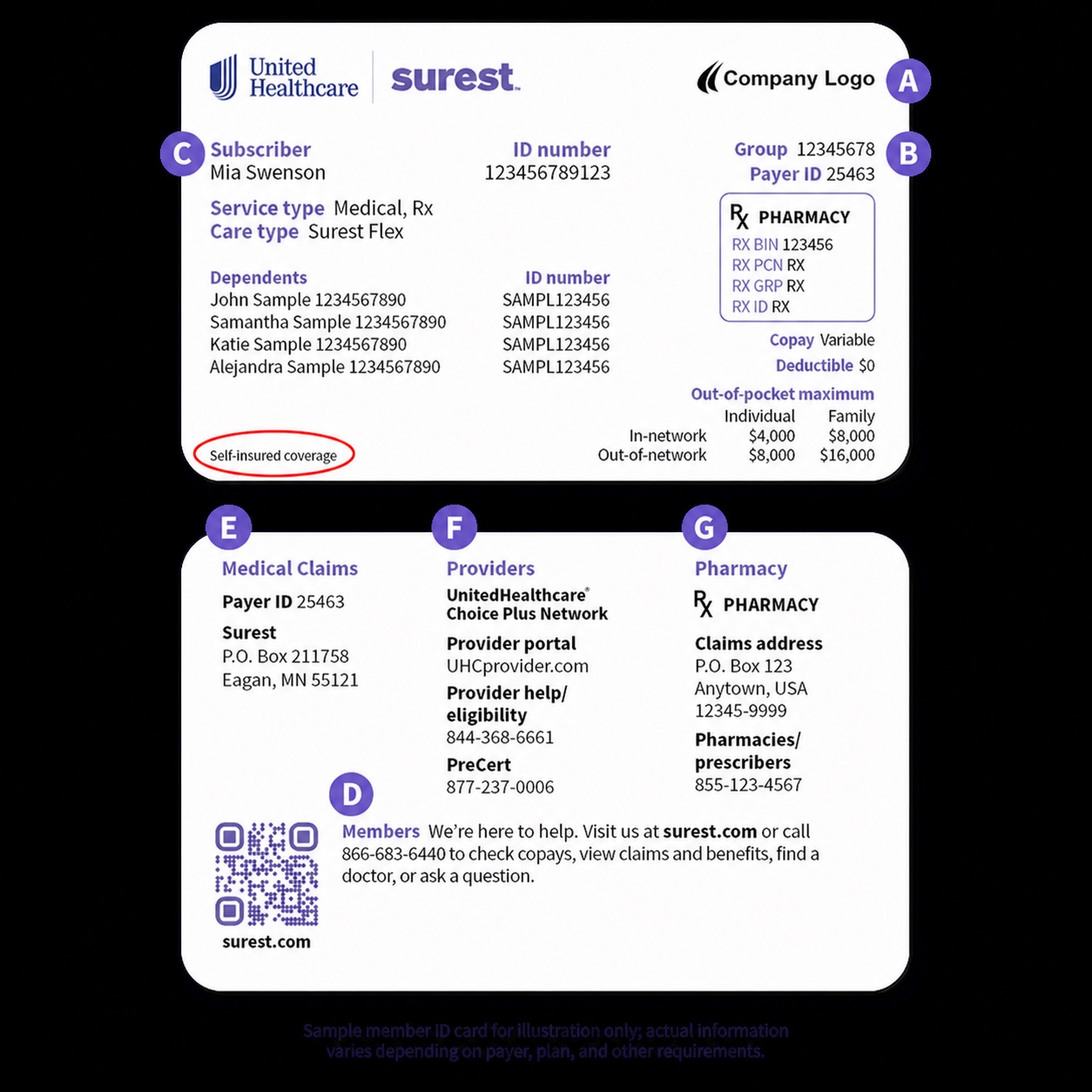
“Self-insured coverage”
Some cards place a short funding label on the front rather than in the fine print.
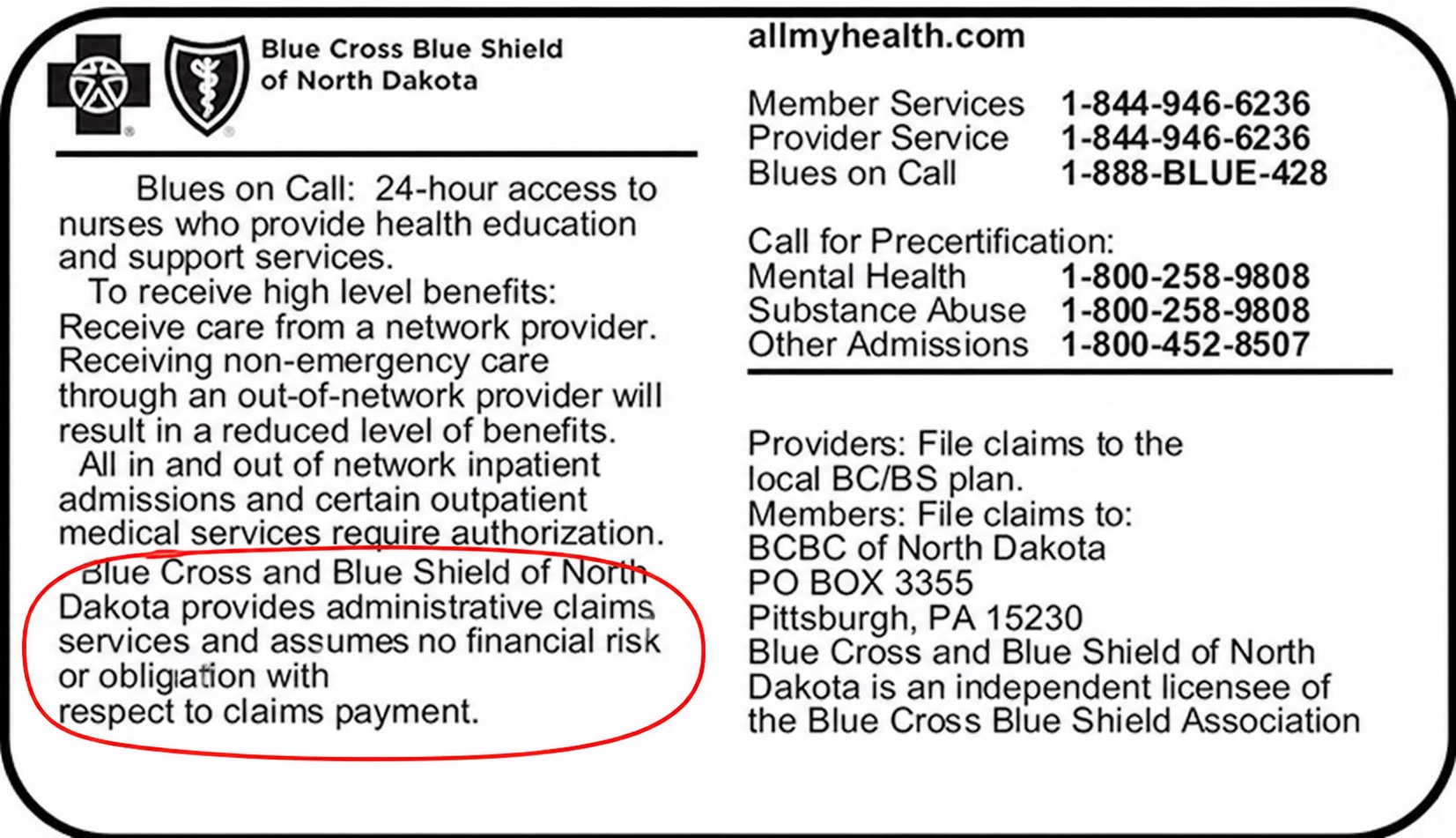
Administrator assumes no financial risk
The carrier handles claims, but the plan sponsor bears the financial responsibility.
Carrier-issued coverage
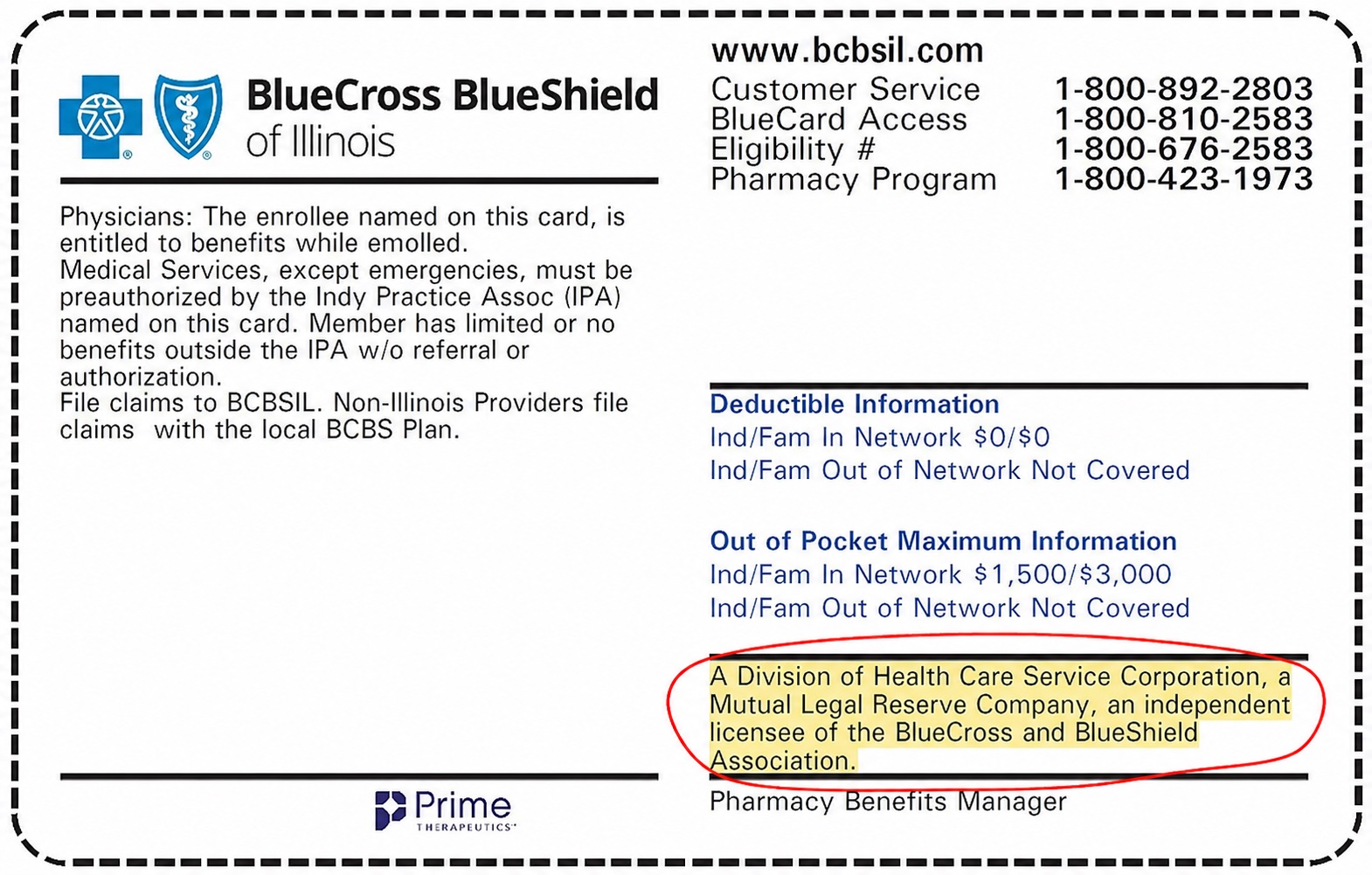
This example is fully insured: the Blue Cross entity is the insurer rather than an administrator disclaiming claims risk.
Do not route from the logo alone. If the card is unclear, confirm whether the plan is self-funded or fully insured through the SPD/SBC, governing plan documents, or the plan administrator or carrier.
Choose the route
The card narrows the path. State guidance confirms it.
Plan funding is one routing fact. The claim still has to fit a protected service category, and the applicable state rules can change the process for fully insured coverage.
STEP 01
Refer to the member ID card
Preserve both sides and record the exact funding language: self-funded, self-insured, administrative-services language, or carrier-issued coverage.
STEP 02
Refer to the state guidance page
Start with the state where the service occurred. Then verify the plan type, facility and provider network status, service category, dates, payer product, and any state-law opt-in before filing.
Before selecting a route
- Confirm the service fits a protected No Surprises Act category.
- Confirm provider and facility network status for the encounter.
- Confirm whether the plan is self-funded or fully insured.
- Check the applicable state page, payer product, dates, and deadlines.